Stories of Impact | Ethiopia
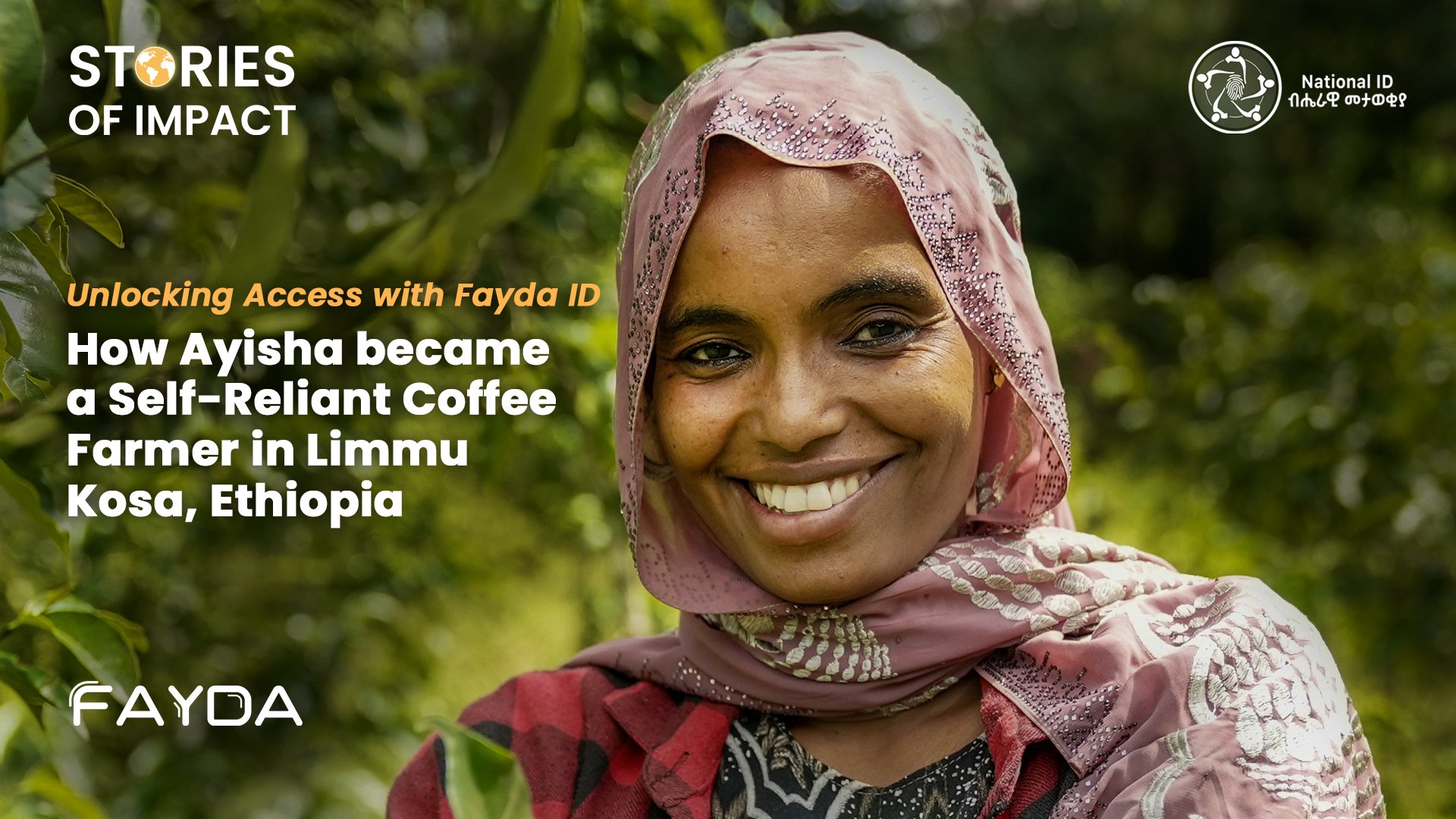
Unlocking Access with Fayda ID: How Ayisha became a Self-Reliant Coffee Farmer in Limmu Kosa, Ethiopia
“Even if you’re scared of something new, like I was of technology, don’t run from it. Ask questions, learn, and keep going.”
Ayisha Sheshafi Abagero may come across as a shy, soft-spoken woman, but her strength is unmistakable. A coffee farmer, a mother of four, and a devout wife, she lives in Limmu Kosa Woreda in Jimma, Ethiopia. A one-hour flight away from Addis Ababa, Limmu Kosa is an area nestled amidst rolling hills, green forests, fertile farmland, gurgling streams, and the aroma of freshly brewed coffee.
It is here, amid nature and community, that Ayisha has slowly transformed her life. She is many things: a homemaker, coffee farmer, cattle-owner, and a small trader.
Her children are her greatest joy and motivation. Ayisha studied only till the eighth grade, but she’s determined that her kids will go much further. “We didn’t have much growing up, but that doesn’t mean our children can’t dream big. I want them to have every good thing the world has to offer and everything that I did not have growing up,” she says with her distinctive smile.
Growing up a coffee farmer
Ayisha grew up in Jimma, raised in a modest and happy household. Her childhood was filled with joy, but also hardships. To support her family, she had to start working early on herding cattle, picking up firewood from the forest, and other chores.
Her mother, also a farmer, worked hard to provide, and to Ayisha, she was a symbol of strength. Ayisha followed in her footsteps, mirroring the craft her mother brought to the coffee fields.
In Jimma, coffee is a tradition. Alongside coffee, Ayisha grows maize, teff—a native grain, barley, and sorghum—a local millet. She also tends to cattle, produces honey, and manages other small trades.
Every farming season brought its share of uncertainty for Ayisha—pest infestations, erratic rainfall, and rising costs of inputs. Sometimes, she managed to find a solution, while the situation slipped beyond her control at other occasions. Help rarely arrived when it was needed. She had to sell her livestock, an ox or goats, to get by. Sometimes, plans for her children had to be postponed because she didn’t have the means. “I knew I had to find a way to stand on stronger ground,” she reflects with quiet determination.
The turning point: A Fayda ID
Ayisha wanted to access a formal loan but she couldn’t access a bank loan without a Tax Identification Number (TIN), which required a recognised national ID. Her Kebele ID, an identification issued by the local administrative unit in Ethiopia, wasn’t enough.
When she first heard about the Fayda ID, Ethiopia’s national digital ID, through a community outreach program, she was skeptical, wary of village talk that the Fayda ID was simply the government’s way of watching people. But repeated conversations with local representatives from the National ID Program, Digital Green, and Awash Bank gradually shifted her perspective. They explained that the ID was created to empower farmers like her, opening access to services, credit, and dignity. They supported Ayisha with documentation and travel to the Jimma Zone Revenue Office—a registration point set up for rural communities.
The registration officers explained each step for enrollment patiently. This was routine for the officials, but for Ayisha, it marked something profound, she felt seen by systems that had previously overlooked her.
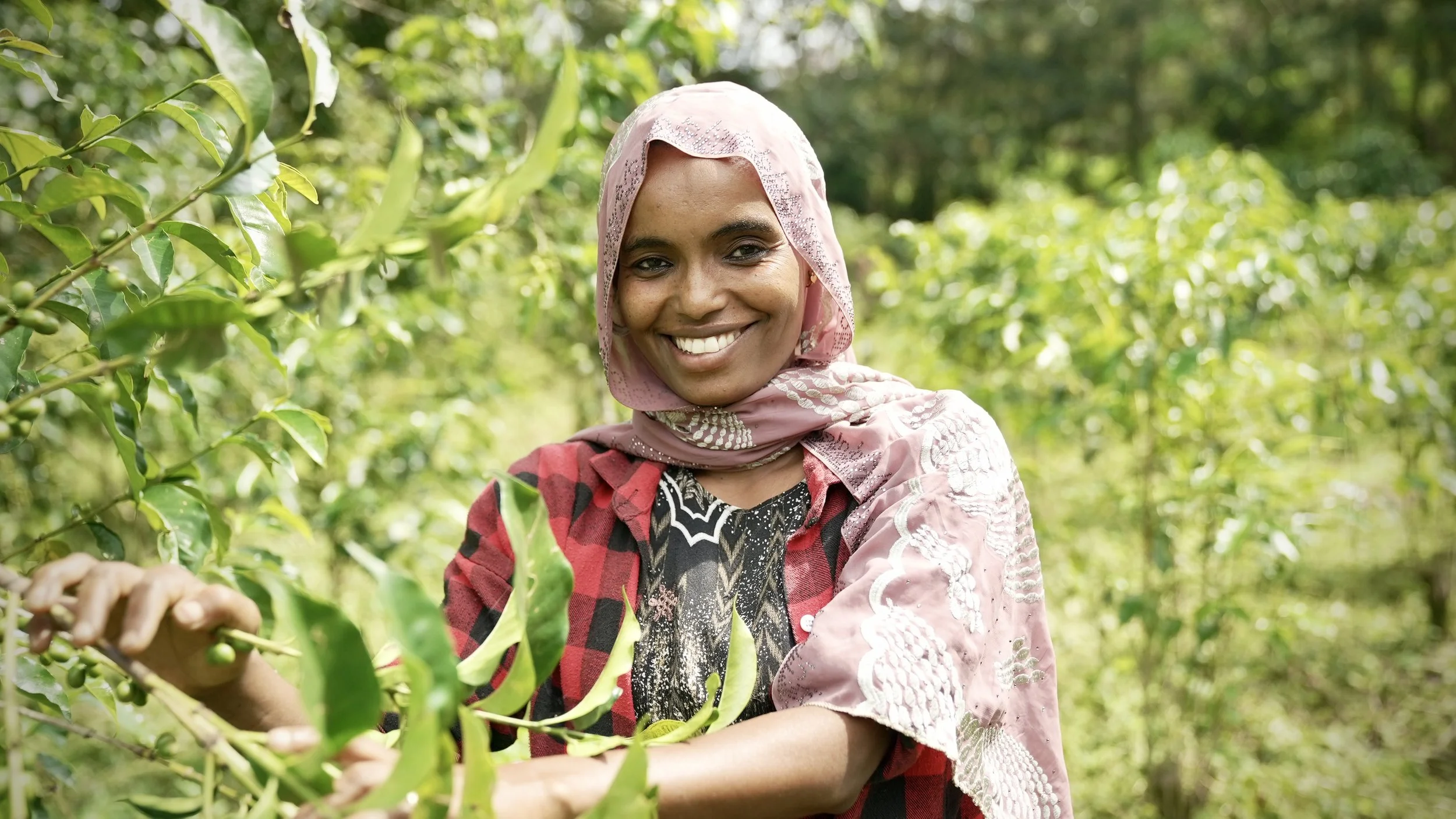
Ayisha: A role model for the community
With her Fayda ID, Ayisha could get her TIN, which enabled the bank to formally recognise her and her business. Ayisha could now have access to a loan. She no longer needed to rely on favours or selling off livestock for her coffee farms. “Now I can loan money from the bank without any judgement or unnecessary questions. I have cleared my debts, and I’m able to help myself financially with full discretion.”
Aiyesha’s confidence of having an identity and being a creditworthy farmer encouraged her to work harder, and uplift others. Her story inspired fellow farmers. Around 158 farmers across Limmu Kosa Woreda registered for the Fayda ID in 2024-2025 (2017 EC1). With the Fayda ID, they gained access to credit.
Neighbours now seek her advice on loans, paperwork, and farming questions. She helps in every way she’s able, just as others had supported her. And in doing so, she has become a leader.
“She has become the example everyone points to. They say that if Ayisha can do it, so can I”, says Mohammed Semman Yasin, the Digital Green representative who supported her throughout the process and has since become a friend of the family.
As of 2025, over 30 million individuals across Ethiopia have registered for the Fayda ID, marking a major step toward digital inclusion.
Beyond credit: confidence and dignity
The ID opened many doors, some literal. Ayisha now holds a SIM card in her own name, and no longer hesitates at district and state checkpoints. Holding an official ID, she walks with certainty.
“What this ID has given me is confidence, and that’s more valuable than anything money can buy,” she says.
At home, Ayisha is still the same devoted wife and mother, but there’s a spark in her—her husband, Ajab Khalifa Mohammed, is quick to point out. “She may not look it, but Ayisha is and has always been very strong. I know this because that’s the woman I fell in love with, in this very place. She’s even more confident and independent now.”
Redefining Success
Today, Ayisha wants to grow more coffee, acquire more land, and someday export it beyond Jimma. She hopes to travel, and take her family to places they’ve never imagined. More importantly, she is determined to lift them into a more secure and stable future.
Ayisha didn’t just get an ID. She turned it into a tool for building, leading, and changing what’s possible for others like her.
About: The technology and digital public infrastructure
Fayda means “value” or “benefit” in Amharic, Ethiopia’s widely spoken language. Fayda is Ethiopia’s foundational digital ID that serves at the national level, built on the Modular Open Source Identity Platform (MOSIP), an open-source, modular digital public infrastructure (DPI). It combines demographic data with eye, facial, and fingerprint biometrics to provide a unique 12-digit Fayda ID number (FIN). The ID enables individuals to verify their identity digitally and enables eKYC (electronic Know Your Customer) for businesses such as banks.
Designed to be interoperable, reusable, and modular, Fayda serves as a unified platform to support a broad range of services from agriculture and banking to health and education, making it a key pillar of Ethiopia’s digital future.
__________________________________
The National ID Program, backed by Ethiopia’s Prime Minister’s Office, leads the implementation of Fayda, with support from a growing ecosystem of government partners, financial institutions, and local service providers like Digital Green and Awash Bank.
Other Insights